Books, Bookshelves, and Changes

Today, I had a need to write some crypto using OpenSSL and noticed that there was an O'Reilly book Network Security with OpenSSL.  I should have that I said.  Amazon had it for $27.97.  Barnes & Noble had it for $31.96.  I wanted to read it tonight.  So I called around and found one at Redwood City Barnes & Noble.  Weather was hot so I took my wife and son along.  When I got there and looked over the book, I noticed for the first time the list price: $39.95.

For the longest time, I used to visit bookstores like clockwork.  At least once a week.  Stacy's and Stanford Bookstore on University Ave used to be my favorite.  I must have dropped at least four figures at those bookstores over the years.  Then I stopped going and started buying over the Web.  My buying habit changed right away.  Instead of walking in with no particularly book in mind and walking out with a stack of newly interested books to read, I started ordering books on-demand, meaning AFTER I got interested.

I also stopped looking at the list prices.  Net result is that I am no longer willing to pay the list price for a book, not even one I want to read tonight.  Instead of paying $12 more than I need to, I am subscribing to O'Reilly's Safari Bookshelf.  Starter account with five book slot (concurrent access) is $10 per month or $110 per year.

I think it's a reasonable deal for average books, but not for keepers like the OpenSSL book.  Oh, well.  I am getting two weeks free so maybe I'll change again during that time and turn into a Safari maniac.  It's funny how seemingly drastic changes sneaks up on us and life moves on.

Update:

Looking ahead, I don't think bookstores will disappear but they will become showrooms for newly published books like the way car showrooms display the latest cars.  New books won't have a lot of peer reviews so best places to check them out will be at the bookstores.

Each book will have an RFID tag so ordering the book you like is as simple as taking the book upto a terminal to display the price and pressing a flashing red button.  At this point, your identity device (cellphone or Visa card) will beep asking you to confirm.  Acknowledge with a click and the order is sent.

Since bookstores needs to carry only a single copy of newly released books, wider variety of books will become available for browsing.  Clerks' will be freed from point of sales only to be kept busy returning books to the shelves.  RFID privacy concern is irrelevant in these bookstores because they will not leave the store.

As I mentioned above, book buying will become more on-demand and less impulse-based, so the business of creating demand will thrive.  Some of that demand will be created by professional book reviewers who sell their service/content to specialty book-peddlers like Amazon affiliates.

Since most of the profit will be in pre-order period in this scenario, book publishers will be able to predict demand much more accurately than before, affecting number of copies printed as well as raising the number of cancelled publications.  This in turn will bring authors, reviewers, and specialty book-peddlers together in a tigher working relationship to ensure greater demand.

Nice pile of bullsh*t, no?
Human Body Online

My thoughts on Virtual Memorial prompted me to revisit 3D graphics engines. 

Commercial 3D graphics engines are just too numerous for me to keep track of although most seem to agree that Id's Doom III engine and Epic's UnrealEngine2 represent state of art as of now.

While there are many open source 3D graphics engines, I thought these four stood out:

Nebula Device (Home, SourceForge, Wiki, Review, MIT License)

Crystal Space (Home, SourceForge, Review, LGPL)

ORGE (Home, SourceForge, Review, GPL)

I found no impressive screenshots to include, send me one.

Tenebrae (Home, SourceForge, GPL)

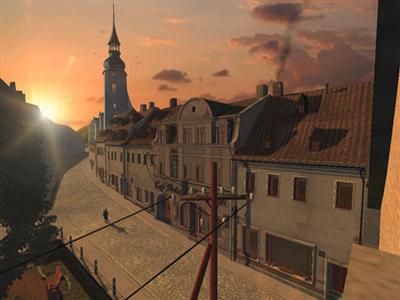
Tenebrae is a version of open source Quake engine with enhancements (stencil shadows and per-pixel lights) similar to those made by Id for Doom III.  While I doubt it is as good as the Doom III engine, visuals are stunning.

Needless to say, 3D graphics technology has advanced a great deal recently.  Still, if you look at the screenshots, you'll notice that the focus is on rendering bodies within buildings and landscapes.  As the title of this post indicate, I am more interested in bodies within bodies.

Like the classic movie Fantastic Voyage, I think a human body makes a great virtual world.  To do this, the 3D graphics engine must be able handle lots of curves because there are no straight lines inside a human body.  There are other complications too like lighting and tearing.

Imagine moving around inside a body to learn about how human body works.

Imagine getting a MRI and then exploring it from inside.

Imagine looking at your unborn child from within your wife's body.

Imagine doing surgery with tiny robots mimicking your actions as you do the same within the body.

Fantasic Voyage indeed.

Measuring Effects of Meditation

NY Times article Is Buddhism Good for Your Health? (registeration necessary) is a good read.  It talks about the efforts by U of Wisconsin neuroscientists to study effects of meditation scientifically with help from Tibetan Buddhist monks.

The Wisconsin researchers, for example, are focusing on three common forms of Buddhist meditation.

One is focused attention, where they specifically train themselves to focus on a single object for long periods of time.

The second area is where they voluntarily cultivate compassion. It's something they do every day, and they have special exercises where they envision negative events, something that causes anger or irritability, and then transform it and infuse it with an antidote, which is compassion.

The third is called 'open presence.'  It is a state of being acutely aware of whatever thought, emotion or sensation is present, without reacting to it.  They describe it as pure awareness.

I have done all three types of meditations in the past but found some problems in practicing them everyday.

First problem is the lack of compelling need to create the necessary discipline.  Being deeply hurt emotionally and release from the pain is a good enough, but I am no serious wounds like that, just minor half-healed scars.  Lacking why makes it difficult to keep doing it.

Second problem is the detachement from life that results.  For example, I can look at a baby and, with an effort, erase all effects of my vision such as warmth and love.  It's not an easy effort and maintaining the state takes a lot of practice like trying to balance oneself on a razor's edge.  Still, doing it leaves me empty, not happy, like one feels after reading a stack of Existentialism books.

Process is different from desensitization, but the effect is similar.  It's like shattering a vase, erasing the essense of the vase and emptying its content.  I think the voluntary cultivation of compassion is the attempt to glue the vase back.  Maybe the professional monks know better, but I am not sure if the result is as good as new.

Another thing is that mind and body sometimes acts separately.  When my dog died, I felt emotional pain so I shut part of my mind down.  Meditation is great for emergencies.  But I found tears running down my calm stony face.  Cocooned, I felt no sadness but tears ran like river.  Yes, that was a weird experience.

The last problem was the mentioned in the article.

The fact that the brain can learn, adapt and molecularly resculpture itself on the basis of experience and training suggests that meditation may leave a biological residue in the brain — a residue that, with the increasing sophistication of new technology, might be captured and measured.

No kidding.  I believe that every action one takes, everything one sees, hear, smell and touch, every word one utters, and every thought one has changes us in body and mind.  Hit someone in the face once, you change.  Read Koran or Bible, you change.  Look at a flower, you change.  Everything changes us, but meditation can affect one as strongly as trauma or life long abuse can.  Powerful stuff.

I think the research is a Good Thing because people will finally learn the real benefits as well as dangers of meditation.

Ray Ozzie Slashes Patent-Troll-Wannabe Eolas

When I first heard of Eolas being awarded half a billion dollars against Microsoft over some idiotically obvious plugin embedding patent, I thought the case had no merit and would eventually go away.  Well, it hasn't to my surprise.  Even worse, it's going to affect browser users as well as developers.

Ray Ozzie wades into the fight with his Saving the Browser post in which he demostrates convincingly and meticulously why he thinks Lotus Notes R3 is a prior art that voids Eolas's patent.  I am convinced and appreciate Ray's considerable effort in foiling Eolas.  While Eolas is not a patent troll in the strictest sense, it sure is starting to stink like one with this silly patent.

Islam as an Immune System

I thought about 9/11, wars, and religions for most of today, playing with perspectives that will allow me to get a better grip or understanding of what is going on.  [ Actually I was working all day on crypto code of all things, wrestling with PKCS#11 and hand-parsing ASN.1.  No wonder I had a background train of thought running… ]

Most interesting one I came up with was seeing Islam as an immune system, designed to defend the body, Islamic nations, against invaders whether the invader is an army or a meme.  From this perspective, a call for Jihad is a signal to increase production of antibodies (terrorists).  Now the questions I raised in my Understanding Jihad post makes a lot of sense.

I googled to see if anyone else had similar views and found Our Wonderful Immune System in which the writer, apparently Islamic, links immune system to the Creator.  Not exactly what I was looking for, but eery nonetheless.

If enemy members are more than the currently fighting macrophages (immune cells) can handle, a special substance is secreted. The name of this substance is "pyrogen" and it is a kind of alarm call.

Is Jihad a Pyrogen?  I am not sure.  There is also an entire book on the subject, The Miracle of the Immune System by Harun Yahya.

If Islam is an immune system, neither violent nor peaceful approaches to the Middle-East problems make sense.  But then I have three gas guzzlers: an old Cadillac, a mini-van, and a SUV.  Damn.  I guess we have to mess with their immune system.

Atom’s use of PUT and DELETE

I have been against the use of PUT and DELETE in the Atom API.  My reasoning is that PUT and DELETE support is spotty and use is rare which means they are not as proven as GET and POST.  Another concern I had was that those who were pushing for PUT and DELETE weren't looking at all sides of the problem.  For example, Atom wiki's CarrotVsOrange page which enumerates the issues listed only server-side platform support information.

Early this morning, I prepended "Server-Side" to that section's title and added another section for client-side.  By 4:30PM, the section has filled up and, although still incomplete, clearly shows some spotty support of PUT and DELETE on the client side.  It's a wonderful display of Wiki power.

There also also the proxy and firewall to consider.  I may create a separate section for that as well if others don't.

Please take a look and help out to complete the section (1.6).

Ten XForms Engines

If you are interested in future web technologies, read Ten Favorite XForms Engine article to get a snapshot of current XForms landscape.

While XForms has unusually large number of implementations at draft stage, I have little hope for XForms replacing DHTML.  Benefits of XForms are not compelling for most web applications and there are complications that prevent wide deployment as a web technology.

Server-side implementations hide XForms behind other readily deployable technologies by generating instance-specific DHTML from XForms.  Unfortunately, this approach alienates web designers and hands-on-the-metal developers who likes to have full control over DHTML.

Client-side implementation can be either installable or zero-footprint.  Install approach has the obvious distribution problem.  Zero-footprint approach, typically implemented as Java applets, Flash movie, or general DHTML-based engine often result in usuability problems such as forms loading slowly or sluggish UI.

I still think XForms can be of value in niche markets, but I see little chance of it taking off in horizontal markets unless Microsoft builds a XForms engine into IE, basically same story as SVG.  I mean what compelling incentives are there for Amazon, eBay, or Yahoo to deploy XForms?

Virtual Memorial: Visiting World Trade Center

My previous post on Virtual Protest and today being 9/11 made me think of Virtual Memorials.

A Virtual Memorial can be as rich as Star Wars Galaxy or EverQuest in full 3D or as simple as text-only MUD or MOO.  As long as it is immersive enough to captures the event in both space and time and let visitors interact with each other, technology doesn't matter.  Go there and maybe one can see the people who there and are no more.  Sit there along aside and experience the event unfold.

Inside the Virtual 9/11 Memorial, everyday is September 11th, 2001.  Inside Virtual Pearl Harbor Memorial, everyday is December 7th, 1941.  A place to go and remember the day.  Maybe share a line or two of thoughts with others.

BloggerCon 2003

"Dave" is going all out to turn BloggerCon 2003 into a major event for not only bloggers, but also politicians.  Check out his plan for a monster BOF on blog tools in Day 2 of BloggerCon.  Maybe even Dan Rather or Tom Brokaw will make a surprise audience to see how bloggers are impacting 2004 Presidential Election.

Yesterday, I had the urge to hop on the Howard Dean wagon.  It's not that I like Howard Dean.  I hardly know the man and what he stands for.  I just want Bush out of the White House and Howard Dean looks like best bet at this point.  Thankfully, I stopped myself by banging my head against the wall.

Besides, I feel that I already contributed with the Virtual Protest Ring Tone idea.  I doubt Bush will use the idea but I can see people sharing "Bush, You are Outta There!" ring tones.